Clubs & Societies Spotlight: UPEI SMCSS hosts first-ever 24-hour hackathon

More than 40 students, professors, mentors, and members of UPEI leadership gathered in the Faculty of Sustainable Design Engineering and Business (FSDEB) building as the School of Mathematical and Computational Sciences Society (SMCSS) officially opened its first major event of the semester: HackWithSMCSS 2026: Green World Hackathon on Jan. 23.
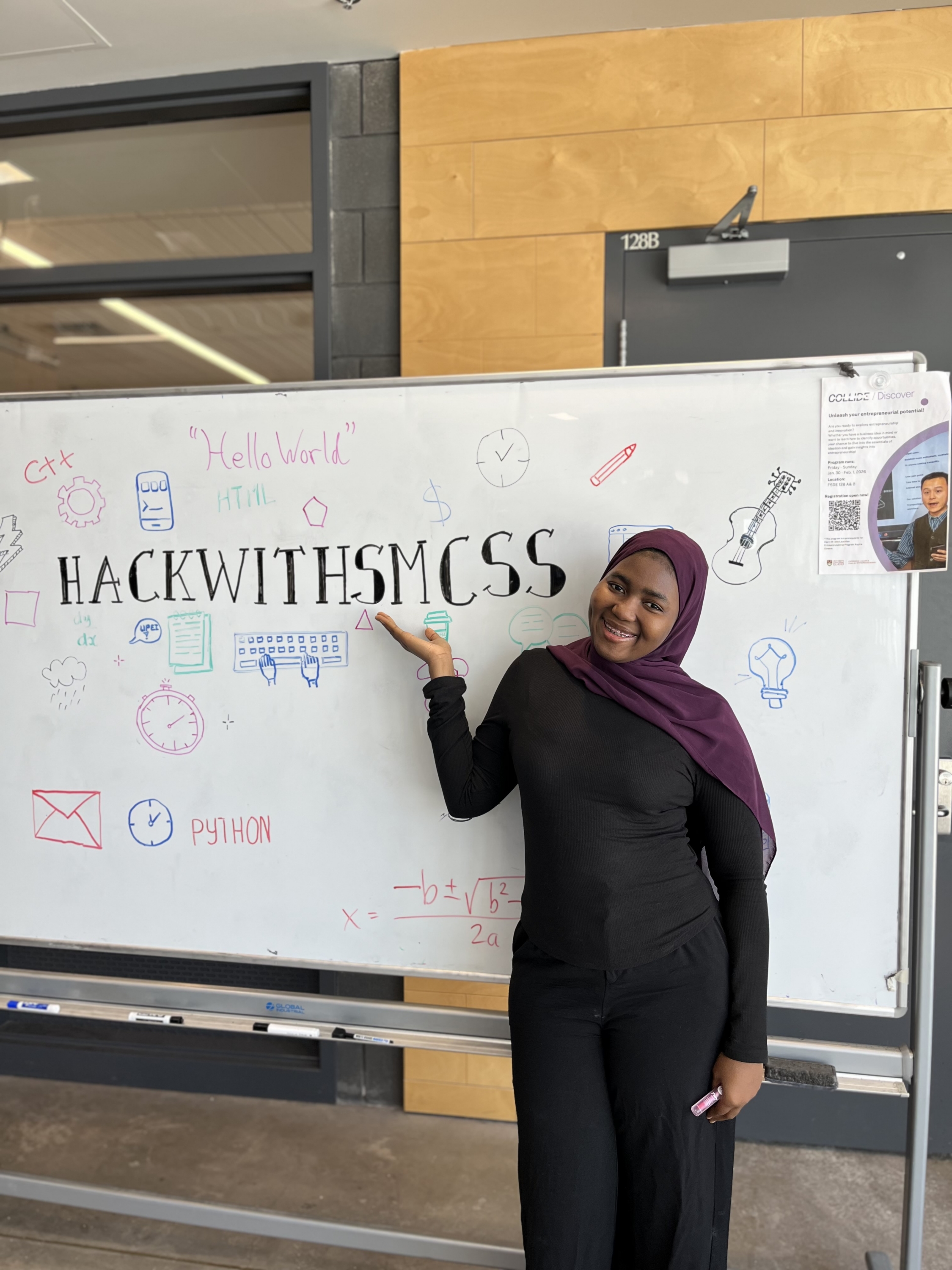
The 24-hour sustainability-focused hackathon is the first of its kind for the Society and the UPEI campus. Among those in attendance were UPEI President and Vice Chancellor Wendy Rodgers, faculty members, and external industry mentors, who served as judges.For Habiebatou Sam, Vice President of SMCSS, the event was about more than competition. “We wanted to build a community,” Sam said. “Hackathons are common at other universities, but UPEI has never really had one. We wanted to bring everyone together to build something meaningful.”
The hackathon brought together about 50 participants across 13 teams. While many were computer science students, the event was intentionally open to participants beyond UPEI and beyond one discipline. Teams had 24 hours, beginning at 5 p.m., to brainstorm, develop, and present a working solution aligned with one of three sustainability themes: clean water and sanitation, affordable and clean energy, or responsible consumption and production, which were all drawn from the United Nations Sustainable Development Goals.

“These themes are broad on purpose,” Sam said. “We wanted people to think outside the box and come up with solutions that could actually have an impact on campus, in Canada, or even globally.” Throughout the night, students worked in a shared open space, supported with food, snacks, and access to mentors. By the end of the 24 hours, teams were required to present a demo, pitch their idea, and meet a judging rubric focused on feasibility, impact, and innovation.
Judging the final presentations were Ron Myers, venture capitalist at Island Capital Ventures; Viraf Sarkari, Operations Coordinator at PEI IT Alliance; Amy Andrews, Manager of Entrepreneurship at UPEI; Dr. Dania Tamayo-Vera, Assistant Professor at UPEI; Professor Christopher Vessey, SMCSS Advisor; and Professor Benjamin Cameron, Assistant Professor and SMCSS Advisor. Industry and alumni mentors also played a key role, including Japneet Kalkat (DeepHealth), Ajeet Gill (PayTic), Arjun Kundu (Erode-AI), Mohab Emad (Thinking/Big Inc.), Rachel Lai (Amsted Automotive), and Roshna Roby (Veterans Affairs).
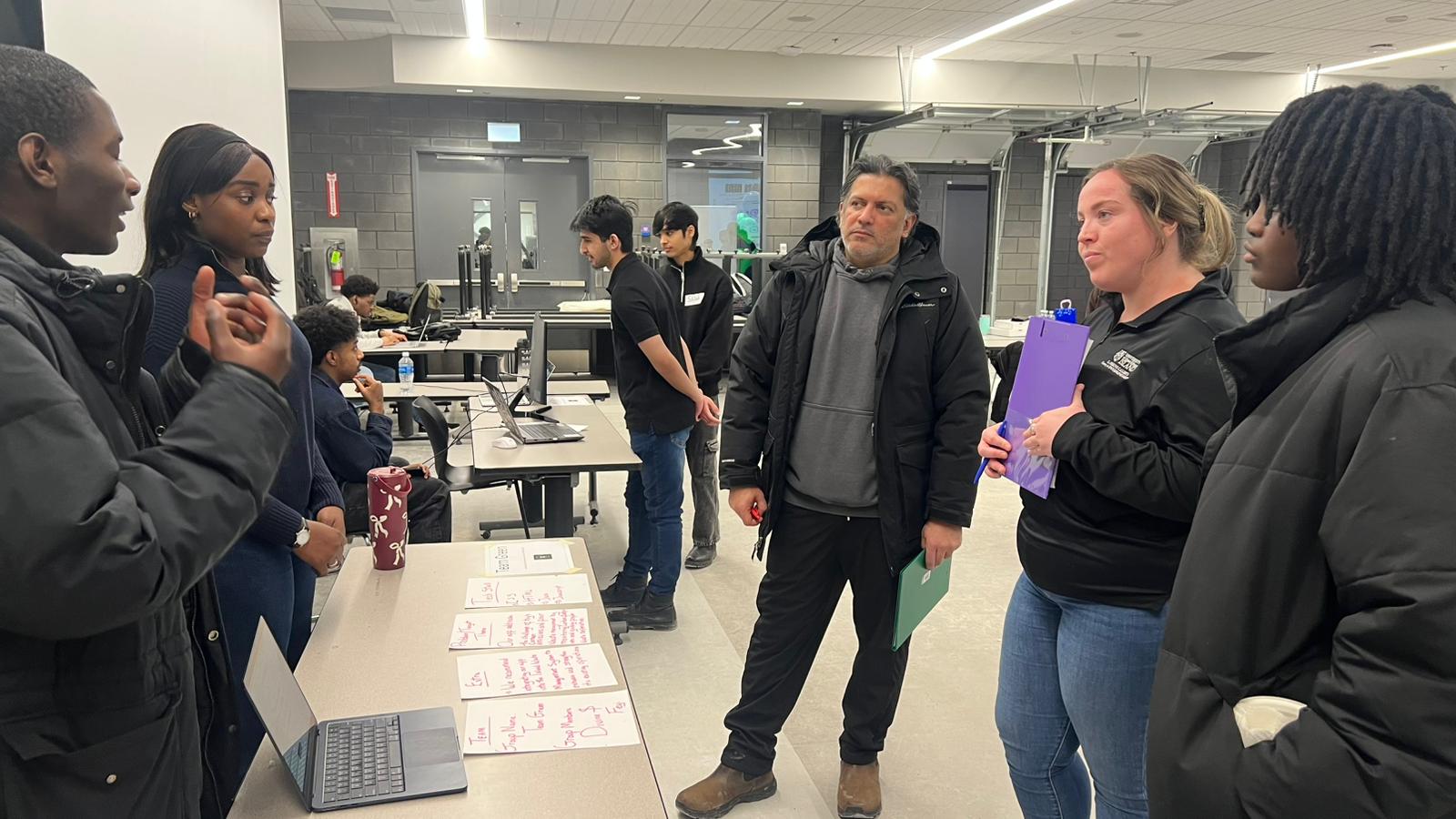
One team came from Holland College, making them the only non-UPEI group in the competition. The team, made up of Kody Verhulp, Xavier Fudge, Chandler Trenholme, and Alexander Fendxur, all Computer Information Systems students, developed an application designed to assess whether specific locations are suitable for wind turbines. Using wind data and environmental factors such as nearby buildings and trees, the application generates a score indicating whether installing a turbine would be worthwhile, along with data on potential carbon footprint reduction. “It definitely has the potential to go further,” Fendxur said.
Another UPEI-based team focused on responsible consumption and production, developing a platform aimed at reducing waste among students that focused on sharing and exchanging items on campus. Several members said the hackathon was their first direct interaction with SMCSS and left them interested in becoming more involved with the club moving forward. While registration filled quickly, Sam said the biggest challenge was not student interest, but funding. “As an SU club, our funding isn’t enough to cover an event like this,” she said. “So we had to reach out to sponsors, and it all happened on short notice.” Despite that, support came through from both industry and the university. Sponsors included Iron Fox Games, the Fritter Factory, Island Capital Ventures, the City of Summerside, and UPEI’s Catherine Callbeck Centre for Entrepreneurship.
“The response was overwhelming,” Sam said. “Companies, professors, and mentors were excited to support this. It showed that people really want to engage with students here.” The hackathon also reflects the broader mission of SMCSS, a club that represents students across computer science, business analytics, data analytics, actuarial science, and related programs. While the Society has existed for several years, Sam said visibility has always been a challenge.
“Marketing was the problem before,” she said. “Even I didn’t know about the club until last year. Our current team is new, and we’ve really focused on making sure people know we exist.”
Since the current executive team took over, SMCSS has hosted a trivia night, a cybersecurity workshop that filled up within minutes, and now its first hackathon. They plan to make HackWithSMCSS an annual event and expand participation beyond one program.
“We want students from engineering, environmental studies, business, everyone,” Sam said. “If you’re building solutions, you need different perspectives.”
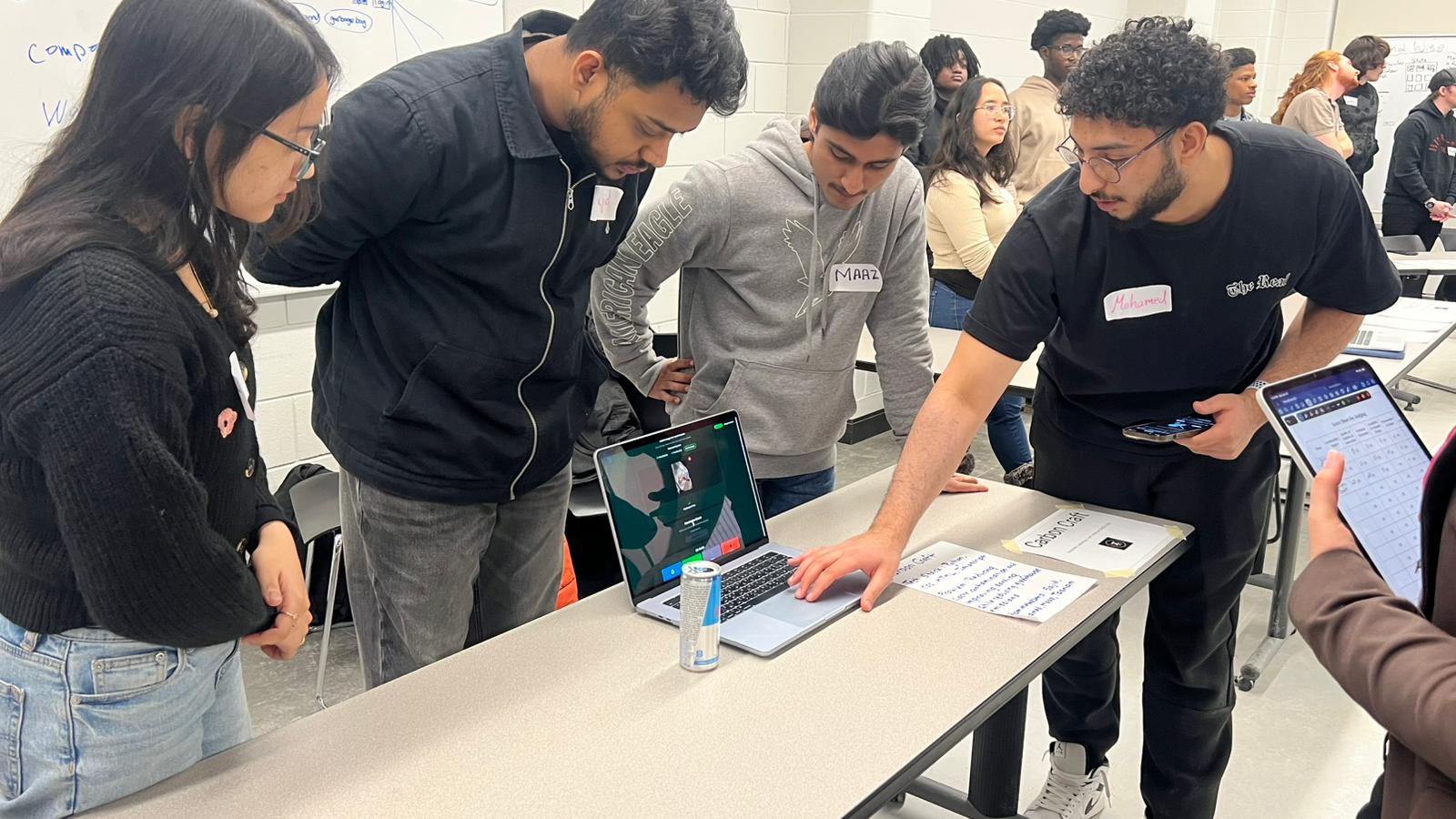
The winners of HackWithSMCSS 2026 were announced across three award categories: the Best Solution Award (CAD $650), the Impact and Innovation Award (CAD $500), and the Audience Choice Award (CAD $100). CarbonCraft received both the Best Solution Award and the Audience Choice Award, recognizing the team’s strong technical execution and popularity among attendees. The Impact and Innovation Award was presented to The Team for their creative approach and innovative impact.
Looking ahead, SMCSS is planning a gaming fundraiser later this semester in support of the hospital. For Sam, the hackathon represents what the Society hopes to keep building. “This showed what’s possible when students are given the space and support to create,” she said. “And we’re just getting started.