Students hear from candidates at UPEISU election debate
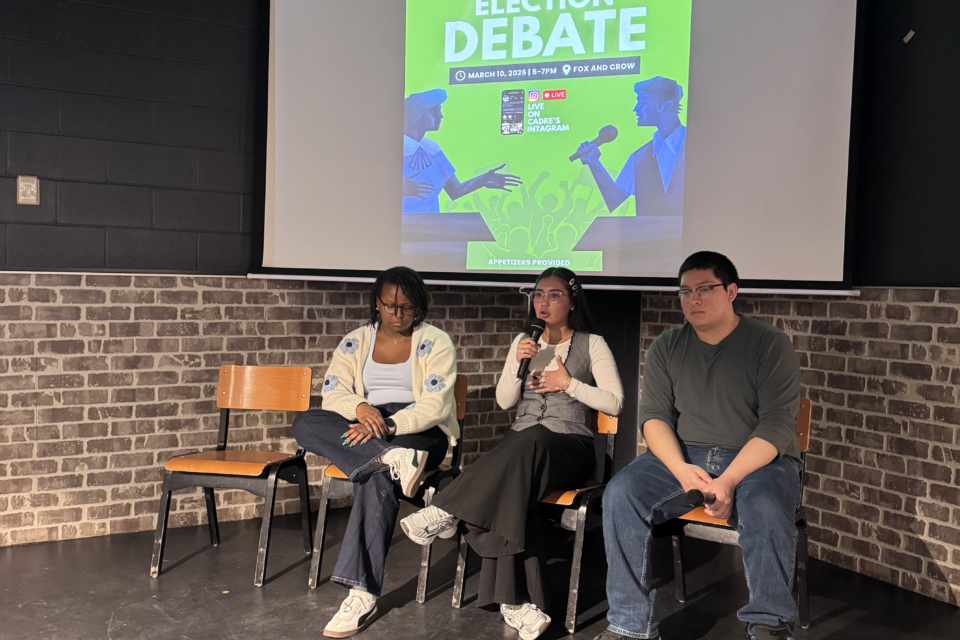
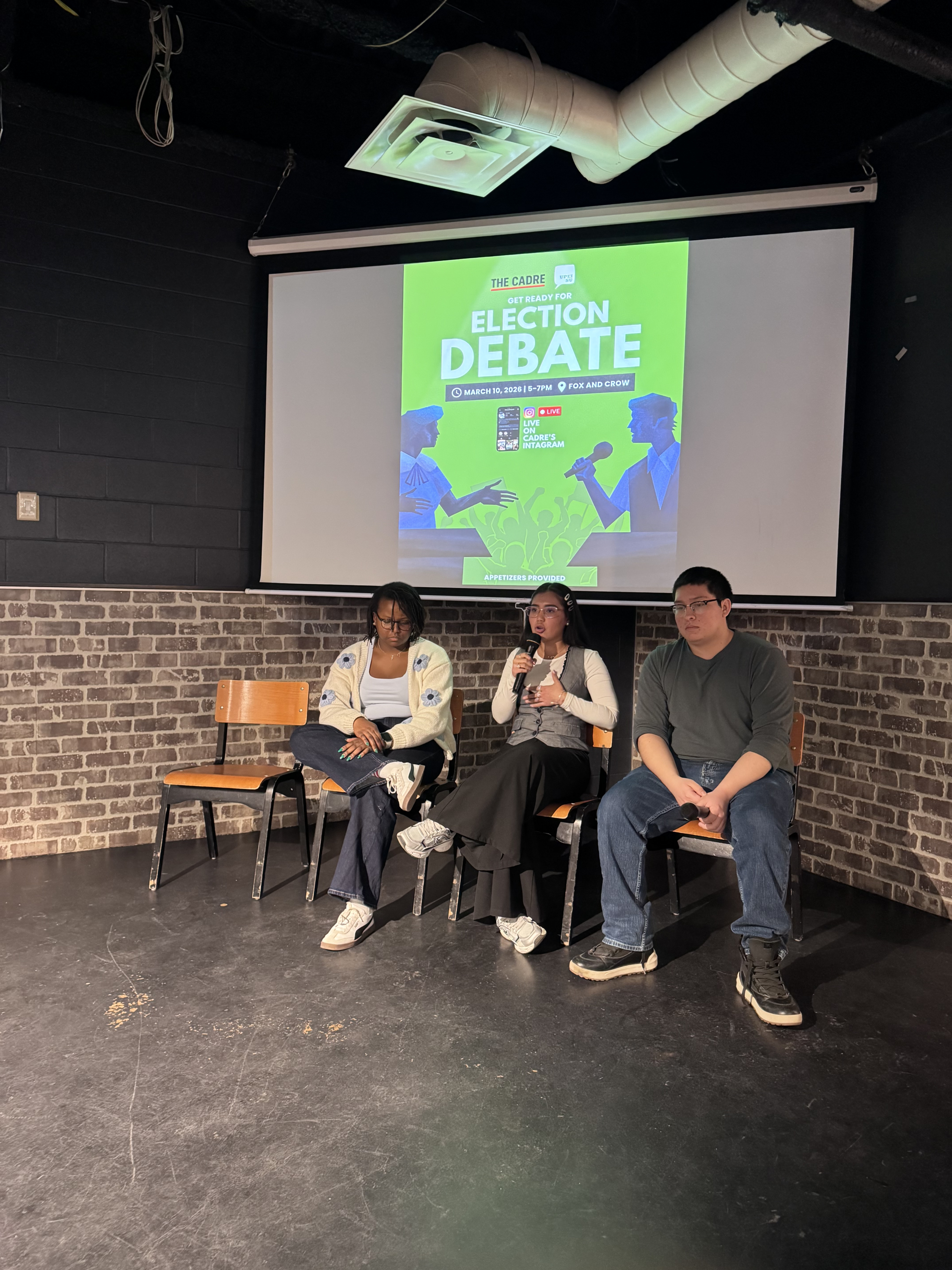
Students gathered at The Fox and Crow on March 10 for the UPEI Student Union election debate, where candidates for executive positions shared their platforms and answered questions about how they would represent students in the coming year.
The debate ran from 5 to 7 p.m. and was hosted by The Cadre. Wanhar served as moderator, Funbi as emcee, Zhyryn took minutes, and Jawad managed student questions.
The event began with welcome remarks and an overview of the debate format before candidates running for General Council positions briefly introduced themselves and their priorities.
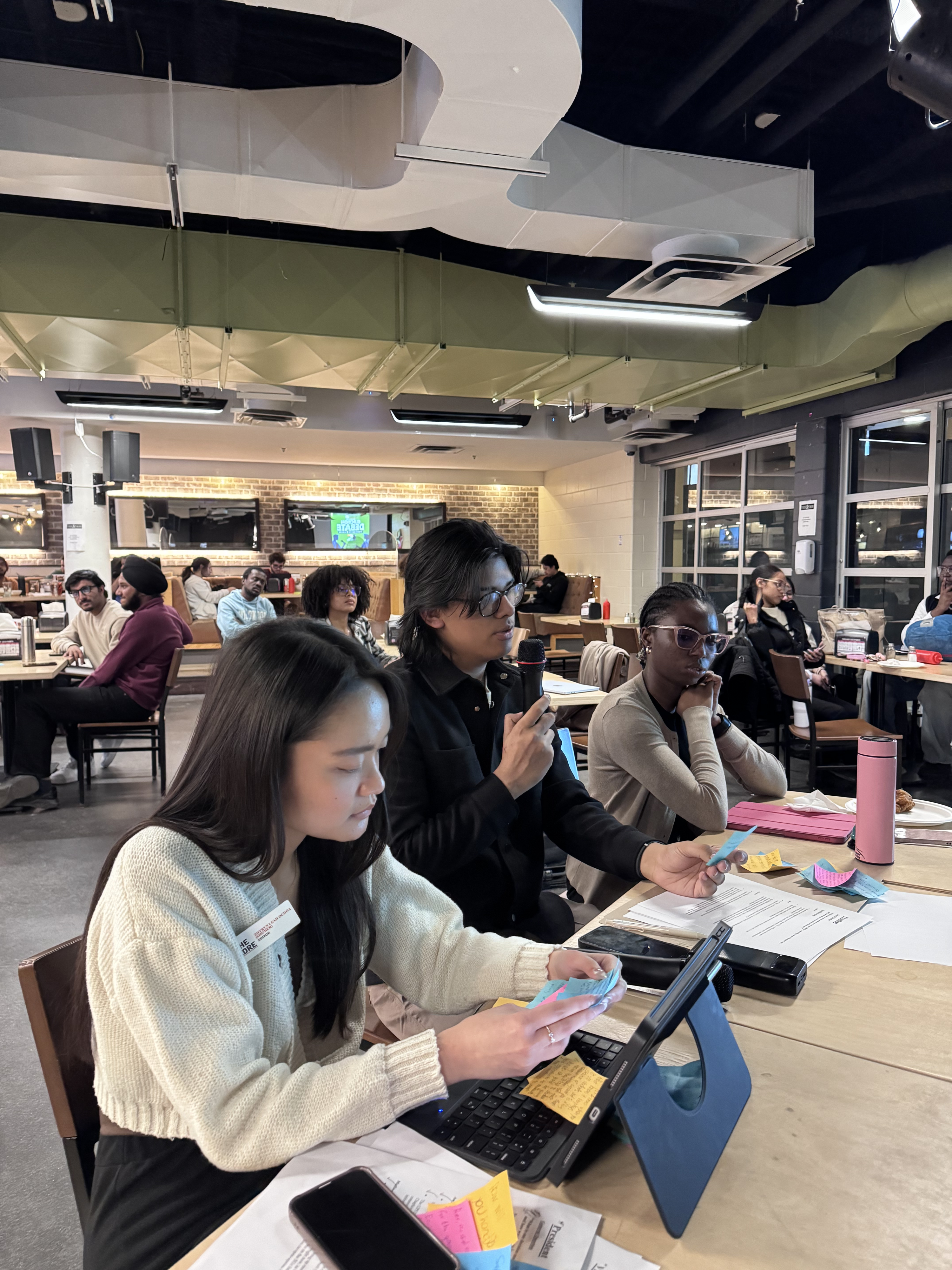
Several candidates emphasized representation and accessibility. Ethan Cole, running for 2SLGBTQIA+ Representative, spoke about creating a safe and inclusive space for students across campus. Loudjina Francois, a candidate for Business Representative, focused on growth and improving the student experience through stronger communication, better feedback channels, and expanded career networking opportunities for business students.
Joshbir Roy, the current Engineering Representative seeking re-election, pointed to his experience representing engineering students within the student union. Shekinah Khim Ybanez Rodriguez, running for Ombudsperson, emphasized accountability, accessibility, and transparency, drawing on her personal experiences and commitment to supporting students facing concerns or disputes. Sabriya Lorin Ruelos, a candidate for Science Representative, focused on improving accessible learning opportunities and helping students adjust to the transition from high school to university. Several other candidates listed on the ballot were not present at the debate, but those in attendance used their time to encourage students to stay engaged with the election process.
Caitlyn Sallavo, a current third-year student and the sitting VP Student Life, spoke about her experience advocating for students during her time in the role and said she hopes to continue improving the overall student experience on campus as she runs for Senate Representative. Ameena Amjad, a first-year student also running for the role, highlighted her goal of strengthening the first-year experience and ensuring new students feel supported and represented. Following the council introductions, the debate shifted to executive positions, beginning with the Vice President External race. Ilyas Aderbaz, the sole candidate for Vice President External, discussed his priorities of advocating for affordable education, improving access to student housing, and addressing food insecurity among students. He highlighted his entrepreneurial background, noting that he currently operates two companies and has experience working with partners in the United States and Morocco. He also emphasized increasing transparency around tuition costs and university finances. According to Aderbaz, many students feel dissatisfied with the information available regarding how tuition is used and how financial decisions are made. He argued that clearer communication between the university and students could help address these concerns.
During the question-and-answer portion, audience members asked how he would balance relationships with external organizations while still advocating strongly for students. Another question addressed the fact that the race was uncontested and asked what motivated him to pursue the role.
The debate then moved to the Vice President Academic race, which featured four candidates.

Lillia Curley spoke about the structural complexities involved in university policies and the limits of what the Vice President Academic role can directly change. She argued that many student frustrations stem from a lack of information about existing policies and resources. As part of her platform, Curley proposed creating pamphlets and informational materials to help students better understand academic policies, as well as legal and health-related resources available on campus.
During rebuttals and questions, she emphasized that improving awareness could help students navigate university systems more effectively. She also explained that the Vice President Academic office could help ensure these resources remain accurate and accessible.
Yoely Almonte focused on advocacy and expanding experiential learning opportunities. She highlighted the importance of hands-on experience and suggested building partnerships with external organizations to create more opportunities for internships, research placements, and practical learning.
Almonte also emphasized increasing awareness of and access to student grants and bursaries, noting that financial barriers can prevent students from pursuing valuable opportunities.
Rupinder Singh brought a variety of campus experiences to the debate, referencing his work in facilities management, his role as a yearbook editor, and his involvement as a campus life advisor. Singh focused on transparency and accountability, proposing the creation of a monthly advocacy report as well as clearer updates from council meetings so students could better understand the work being done by the student union. He also raised concerns about academic requirements that may not be directly related to students’ programs. He referenced the IKE course requirement as an example of a policy that some students feel has been added without sufficient financial reimbursement or deduction. Another element of Singh’s platform involved improving access to academic resources. He proposed creating a centralized Moodle library containing information about policies, resources, and student supports. During rebuttals, another candidate noted that the university library already offers similar resources. Singh responded by emphasizing that the main issue is not the existence of resources, but rather students’ lack of awareness of them. He also highlighted programs that some students may not know about, including the ability to borrow laptops from the university library for extended periods and access free devices through student support programs.
Huong “Luna” Tran, another candidate in the Vice President Academic race, spoke about her involvement with the International Student Office and her desire to represent a wide range of student perspectives. While her platform had not yet been officially approved at the time of the debate, Tran emphasized her commitment to advocating for student rights and improving support systems for students.
The debate concluded with the presidential candidates sharing their platforms. Erica Nduku Kyalo focused on improving access to menstrual products across campus. She proposed ensuring that menstrual products are available in all university buildings so students can access them easily when needed.
Amy Cristina Montesdeoca Castro highlighted the importance of strengthening connections between different student groups. She spoke about increasing collaboration between clubs, societies, and student-athletes in order to build a stronger and more connected campus community.
When asked how the Student Union should respond to potential reductions in international student permits and the financial pressures that could follow, presidential candidate Amy emphasized the importance of transparency and student advocacy.
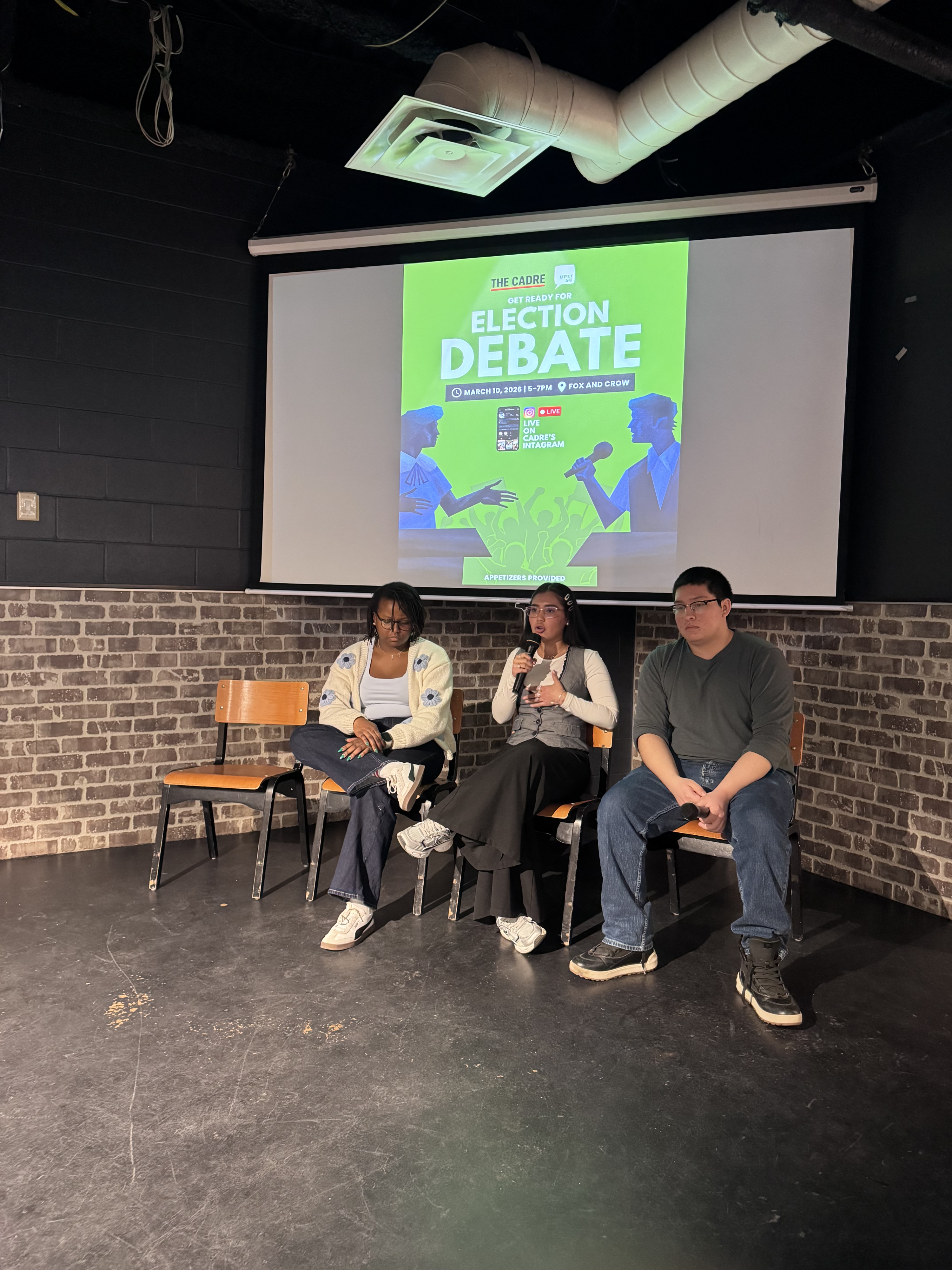
“The 774-permit cap requires realistic, student-centered leadership. While the Student Union cannot dictate federal policy, my duty is to advocate for university transparency and ethical management of resources. I will demand advanced notice on financial shifts so students have the space to organize and stay informed. My priority is creating a safe, supportive environment for those already here, ensuring your experience is not compromised by external pressures. Through the Student Dollar Report, I will champion accountability, listening to your needs to protect our campus. Together, we ensure your journey remains our priority.”
Maximo Tinoco emphasized the value of open discussion within student governance. While noting that there were few major disagreements among the presidential candidates during the debate, he suggested that encouraging more debate and differing perspectives could help students better understand the issues facing the student union.
Throughout the presidential discussion, candidates also acknowledged that many students are unaware of the reports and updates produced by the student union. Improving communication and making these reports more accessible was identified as a shared priority among several candidates.
The debate concluded with closing remarks and thanks to the candidates and attendees. Organizers encouraged students to participate in the upcoming election and remain engaged with student governance. By bringing candidates together in one forum, the debate gave students an opportunity to hear directly from those seeking leadership positions and to better understand their priorities for the future of the student union.