UPEI Students Face Rising Mental-Health Strain, but Support Gaps Remain
As the semester enters its final stretch by mid-November, students’ stress levels are rising across UPEI. Major assignments pile up, daylight disappears before most students even leave class, and conversations around mental health feel more urgent than ever. For some, it’s the busiest time of year. For others, it’s the loneliest.
Their experiences are not unusual. A recent survey conducted by the Canadian Alliance of Student Associations (CASA) found that over 75% of post-secondary students in Canada report feeling overwhelmed by their responsibilities. More than half say their mental health has worsened since beginning university. And yet, many people don’t seek help because they don’t know where to go, they’re afraid of being judged, or they feel they should be able to handle it.
Maamoun has been at UPEI for four years. He’s studied, passed, and failed tests, and in all that time, he’s never been to a mental health event. Not because he doesn’t care, but because he says he’s never really known what was available.
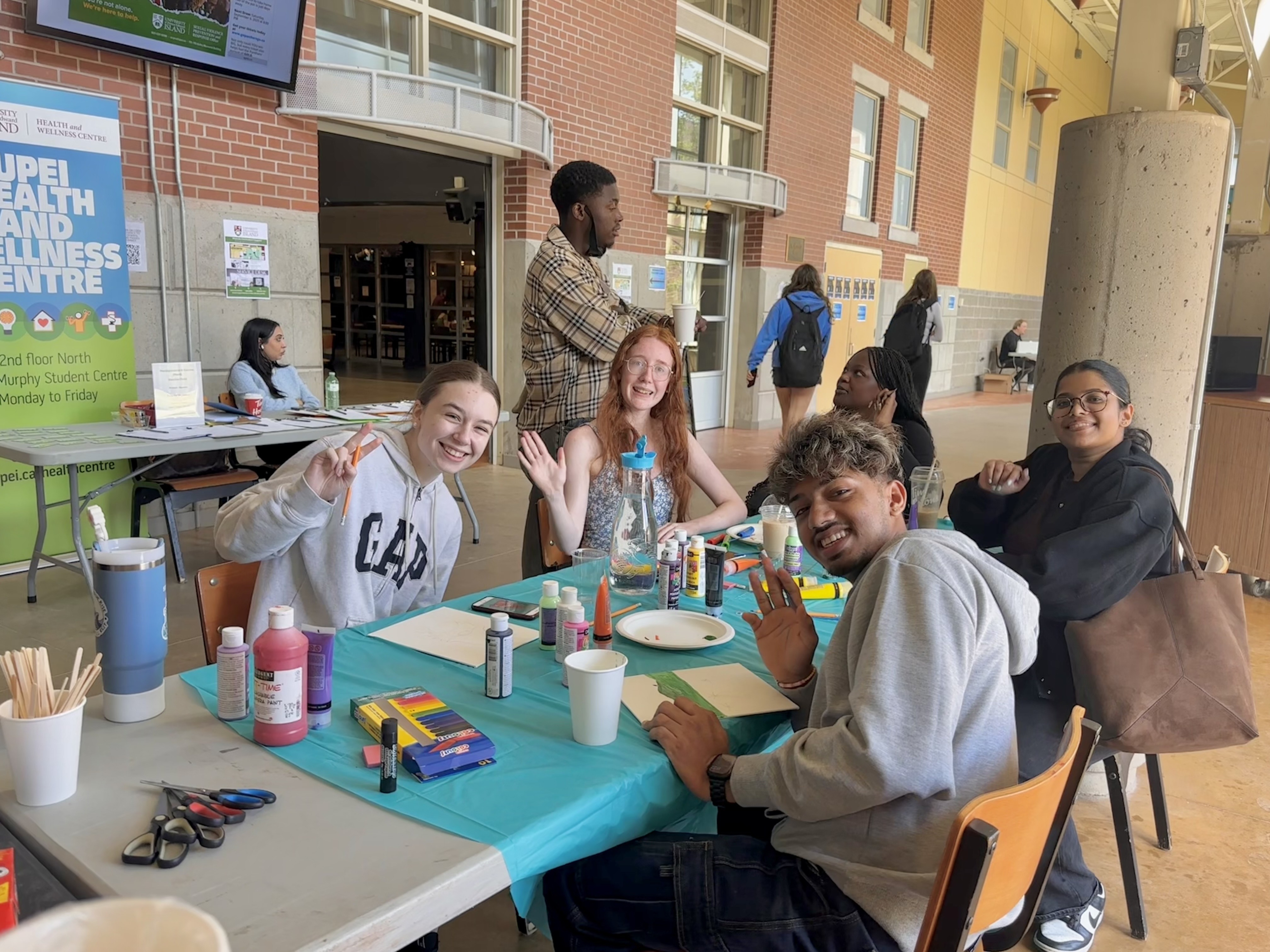
“I don’t believe in mental health in the context when people use serious terms like depression, loosely these days,” he said. “I don’t even know what the university’s doing most of the time. If I ever needed help, I wouldn’t know where to go.”
His friend Chloé de Carvalho had a different take. She’s engaged with UPEI supports before, including getting an ADHD diagnosis through the campus clinic, and feels confident in what’s available. “I think the university does a good job at communicating,” she said. “But I also know I’m lucky. I had a family doctor to refer me, and I have private insurance. Not everyone has that.”
Doug Stringer sees this tension play out every day. As a counselling therapist with UPEI’s Student Affairs, he meets with students navigating stress, burnout, anxiety, family conflict, and the occasional worries about their future. Unfortunately, not everyone gets to his office. “I only know the students who make it in,” he said. “The ones who don’t? I don’t know if they know we exist.”
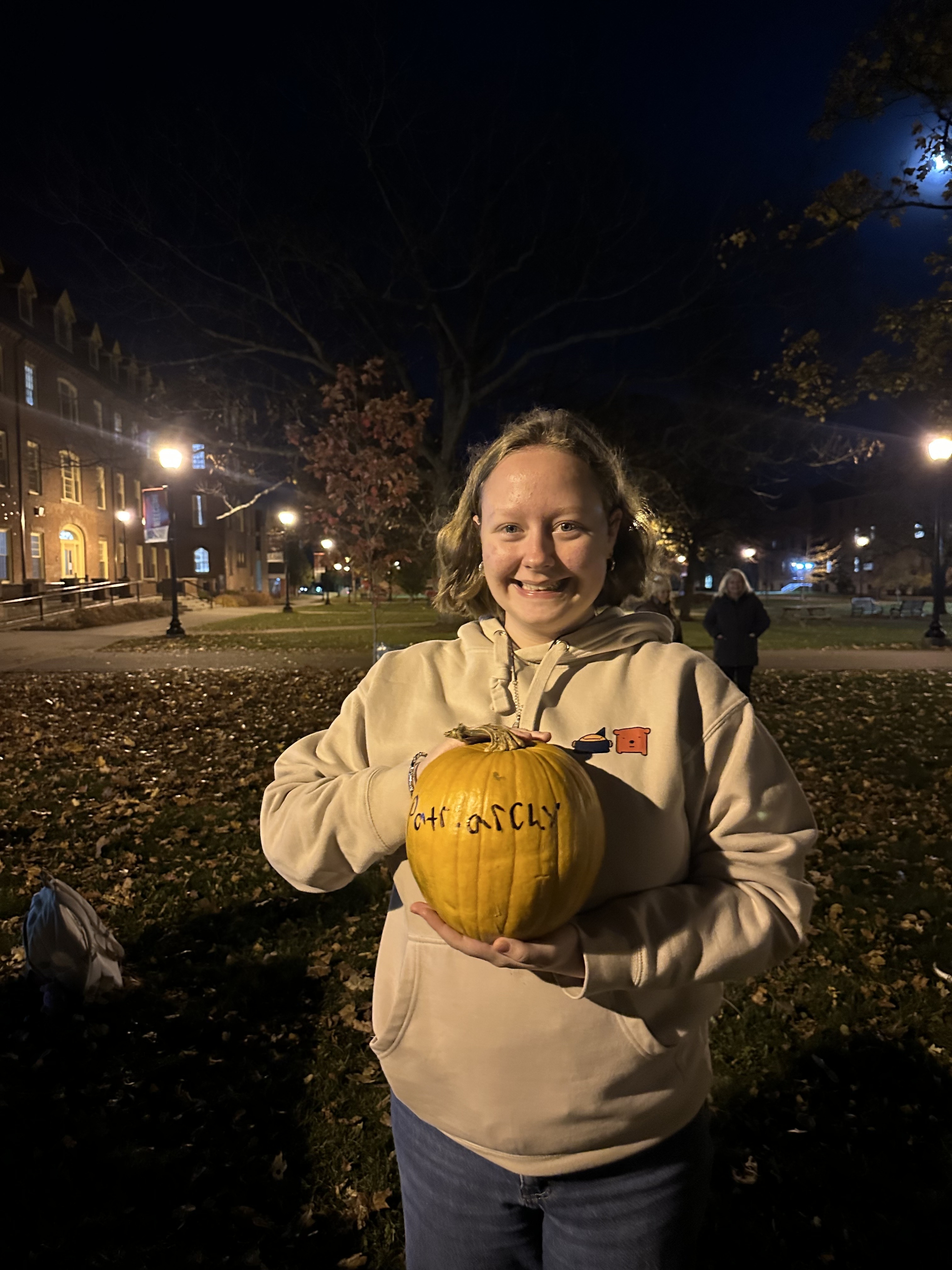
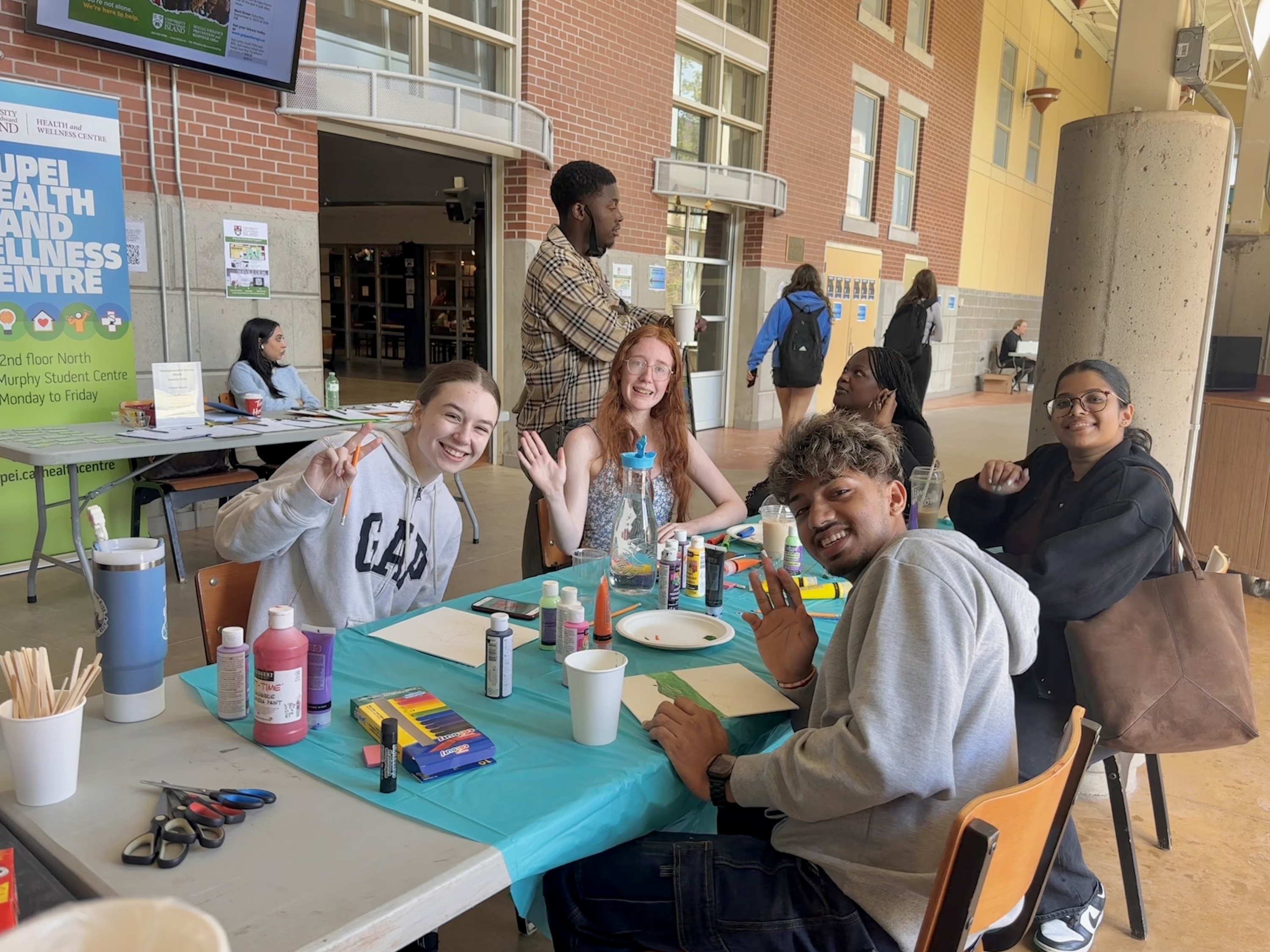
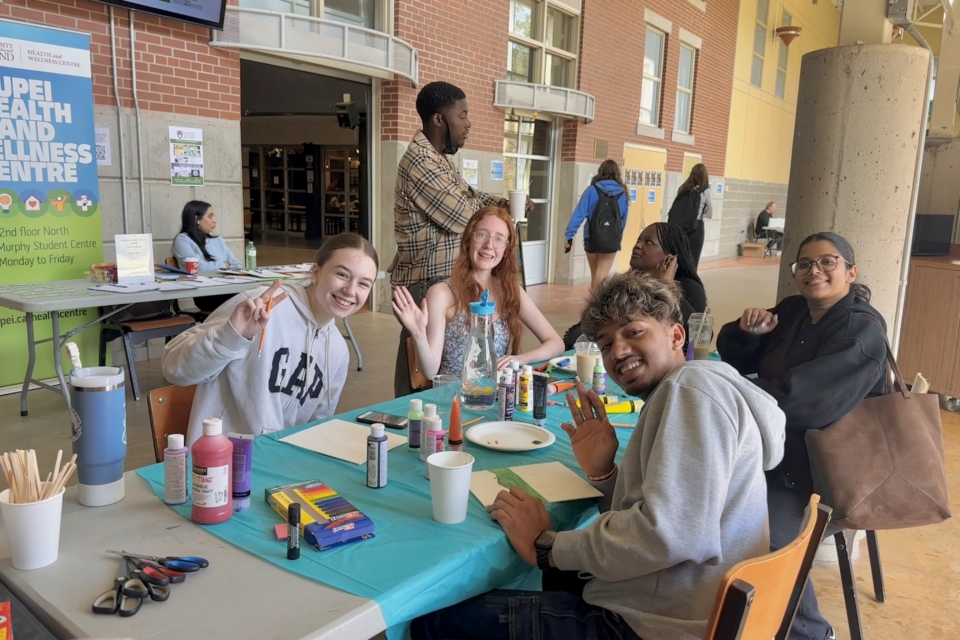
Stringer said one of the biggest barriers students face is the belief that they shouldn’t be struggling in the first place. “If you’re feeling a barrier that ‘I shouldn’t be having this struggle’, or ‘I don’t want people to know that I’m having this struggle’… first of all, you’re not alone,” he said. He emphasized that early support makes a meaningful difference. “You’re really way better off to address something earlier than later… it may be a simple conversation that can help.” That’s the same message Smriti Khatri is trying to push through her work with the UPEISU as the Student Wellness Coordinator. This semester, she has been leading a series of Mental Health Mondays, bringing students together for events like yoga, art therapy, and even pumpkin smashing to relieve stress. “I am a Psychology student myself,” Khatri said. “Sometimes you just want to relax, sometimes you just want to paint, and sometimes you just don’t know where to go. I’m just here to guide them and let them know their resources, let them know there’s a place they can go if they need support.”
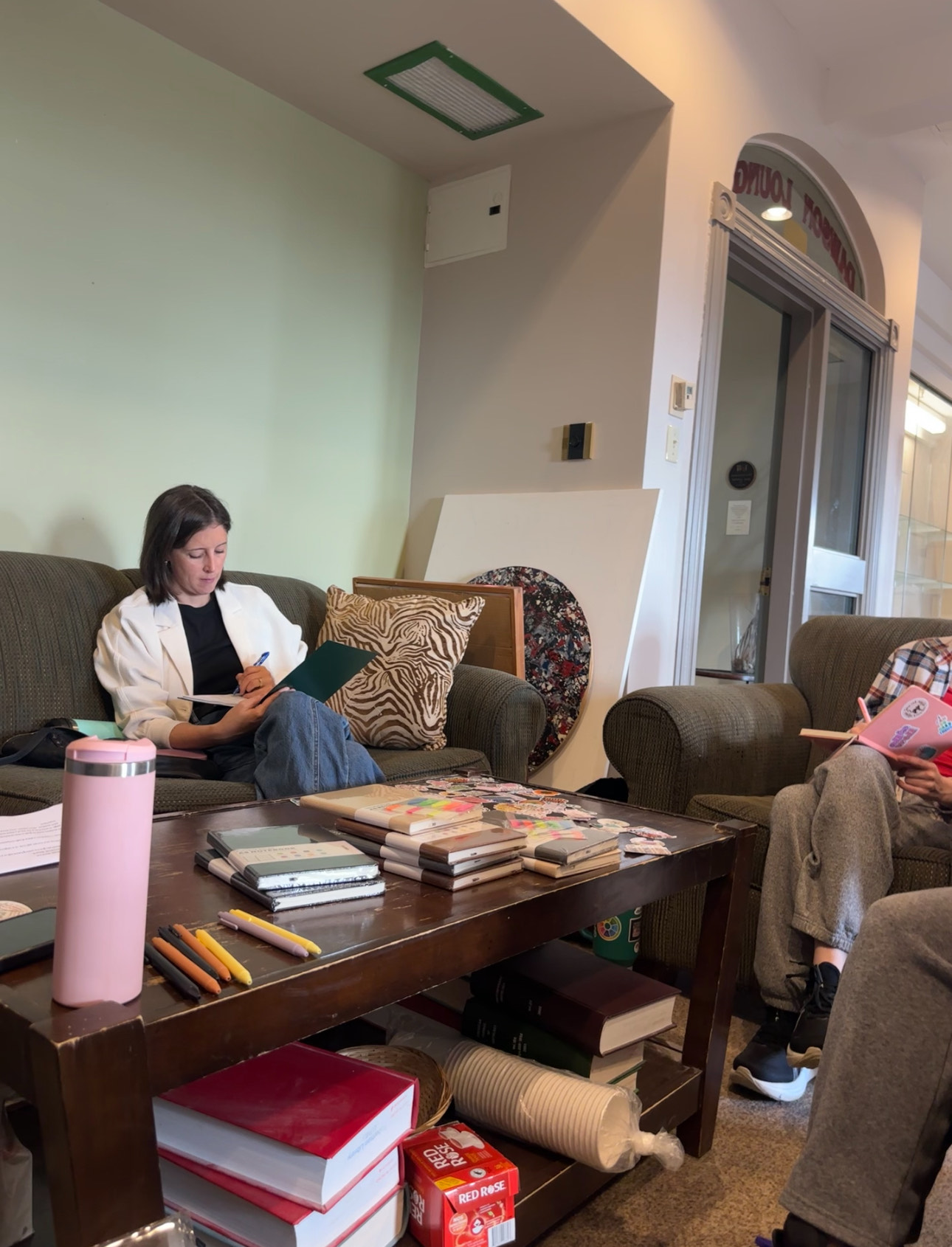
Some events attracted over 75 students, others, seven. But for Khatri, that’s not the point. “There’s always one person who comes up to me after and says, ‘That really helped me today,’” she said. “That’s why I do it.” Still, she admits the biggest challenge isn’t planning events, it’s awareness. “I think there are amazing resources on this campus, but people don’t know about them. I want students to follow the UPEISU on Instagram, check out the resource booklet, and download the BetterHelp app while they still can. These are covered now, but after graduation, it’s hundreds of dollars.” That communication gap between what exists and what’s known is part of what keeps students like Maamoun from ever reaching out. “If I’m struggling, I’ll call a friend,” he said. “But only because I trust he won’t tell anyone. Confidentiality is everything. If I don’t feel safe, I’m not talking.”
Doug Stringer offered this advice for students who feel unsure about getting help.“Pay attention to yourself,” he said. “If you feel off, don’t ignore it. Talk to a friend. Talk to a professor. Talk to us. There’s no shame in needing help. That’s why we’re here.”
Students looking for support can visit Student Affairs in Dalton Hall or book a counselling appointment through UPEI’s website. For events and additional resources, they can follow the UPEISU on Instagram (@upeisu) or check the link in their bio for a full mental health guide.