


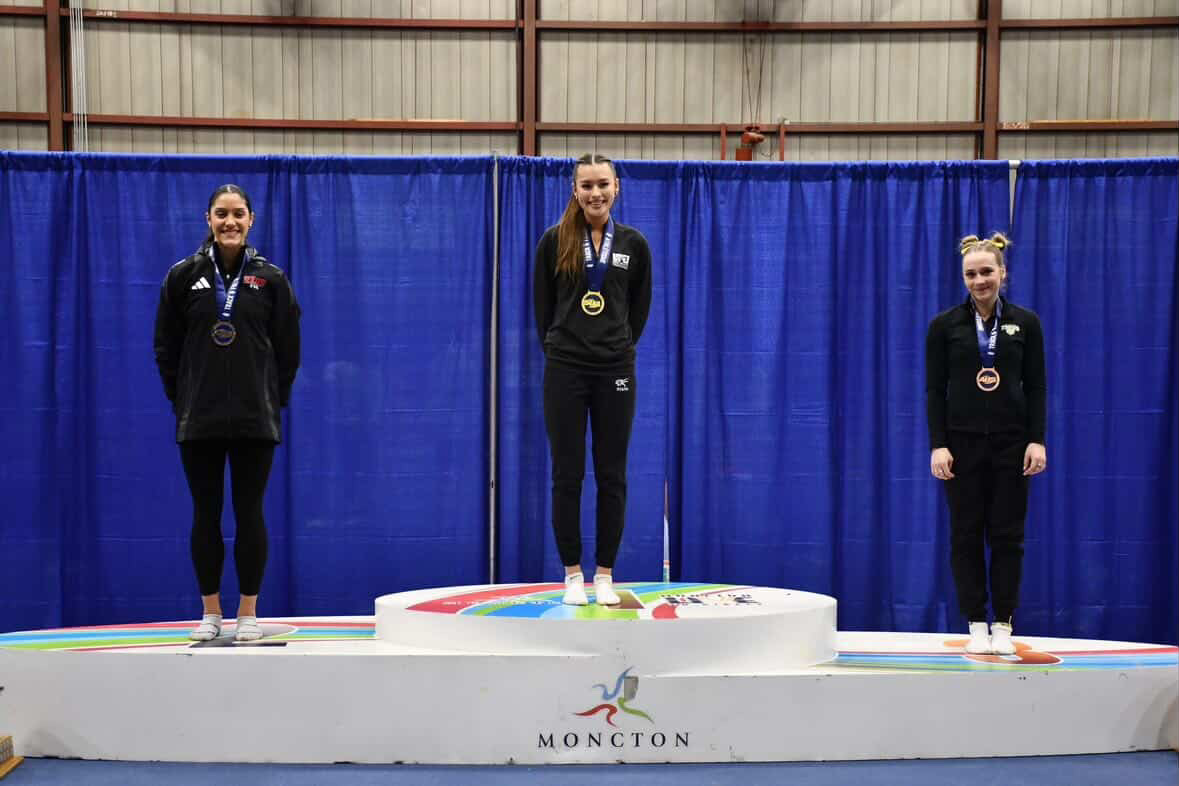
Lilly MacVicar is doing more than just adjusting to life as a university student; she is balancing her academics and thriving in not one, but two varsity sports and breaking records along the way. The first-year business student, who has played soccer since the age of five, only began taking track and field seriously in Grade 12. Although it might have seemed like a late commitment, it has quickly turned into a breakthrough.
Her high school soccer coach saw her potential and encouraged MacVicar to try out track and field. She started training with the UPEI team, and this gave her an early exposure to the university athletics environment. That leap of faith paid off this season at the Atlantic University Sport Championships (AUS), the final meet of the university track season, where athletes compete for a chance to advance to nationals.
MacVicar won AUS gold in the 300 metres with a time of 39.71 seconds, breaking the UPEI school record and posting the sixth-fastest time in AUS history. She also played a key role in the Panthers’ relay events.
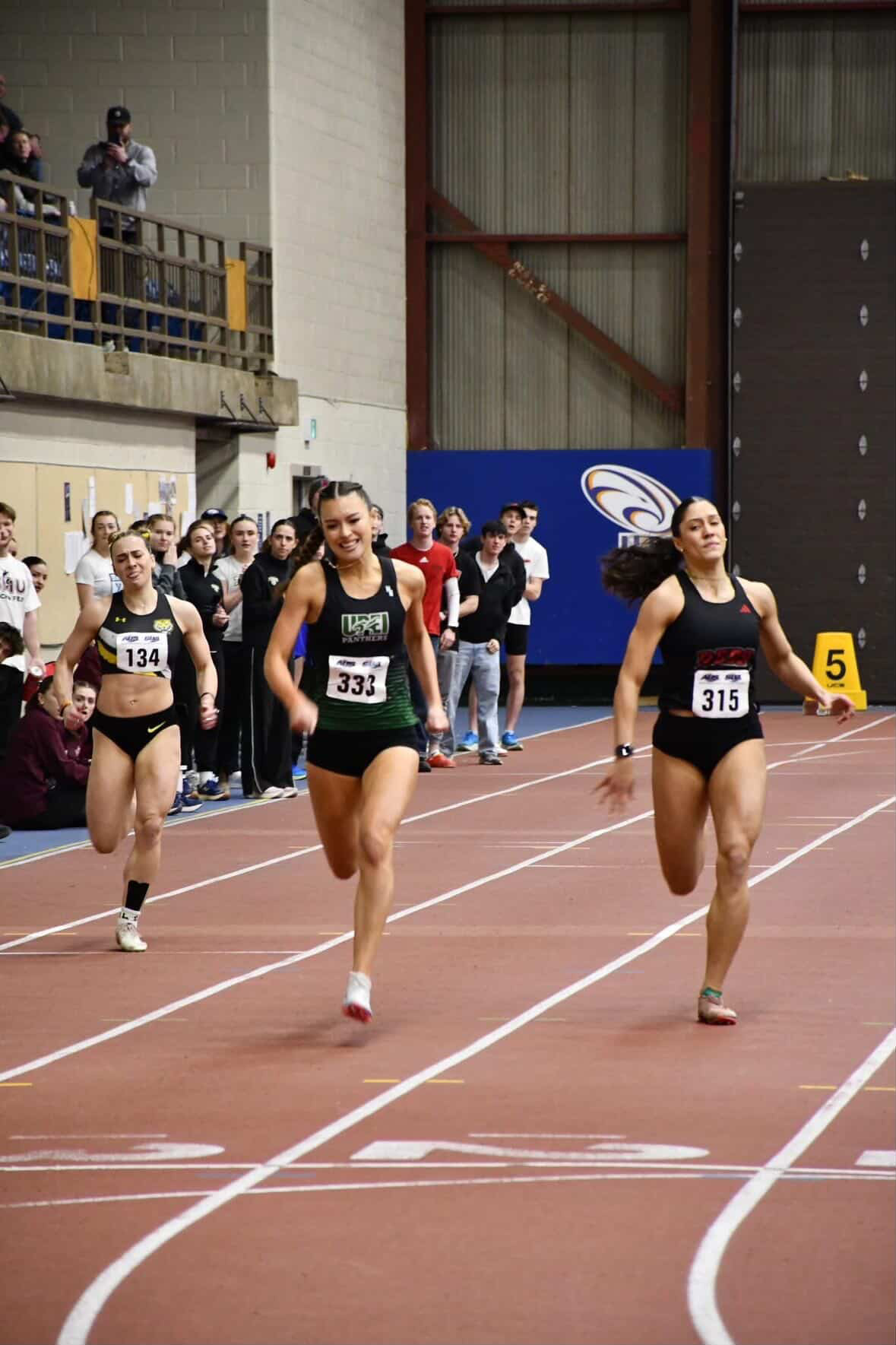

As part of the 4×400-metre team, the rookie ran the fastest split of any athlete in the race, helping UPEI finish fourth while shaving more than 12 seconds off the previous school record. She also contributed to the 4×200-metre relay squad that placed fifth.
Despite the rapid success, MacVicar remains grounded about her late start in the sport. “I never really took track seriously until Grade 12,” she said. “I just really enjoyed it; I made good friends and that’s what made me want to stick with it.”Balancing two varsity sports alongside a full course load requires careful planning and cooperation.
MacVicar is taking four courses this semester to avoid overload, and she is relying on coordination between her coaches to manage training schedules and reduce the risk of injury.
Soccer season runs from August to October, followed by track season from November through March. This schedule allows her to focus fully on each sport while staying connected to her teammates year-round through non-physical meetings and team events.
“It works out great because the seasons don’t overlap too much,” she explained. “Even when I’m not physically training with one team, I stay in touch and stay involved.”
Looking ahead, MacVicar plans to continue competing in both sports throughout her university career. While she is unsure whether athletics will extend beyond university, she recognizes that track offers a more individual pathway for growth.
“Soccer is harder to pursue professionally,” she said. “With track, it depends on how hard I push myself. I will just see how things go over the next few years.” For now, she is choosing to focus on managing school, improving her times, and contributing to her teams one race, one game, and one semester at a time.