

On a campus of nearly 6,000 students, UPEI has about 70 clubs and societies, each with its own mission and focus. And unless every student attended the Clubs and Societies Fair, and every club managed to reach every passerby, there are inevitably groups whose work remains unfamiliar to parts of the student body.
To help bridge that gap, The Cadre is launching a new club spotlight column to highlight clubs and societies across campus, what they do, and why they matter. Enactus UPEI, a sustainability-focused club turning student ideas into real-world impact, is the first to be featured in this series.
Built around the United Nations Sustainable Development Goals (SDGs), Enactus UPEI brings together students from different faculties to create solutions that address environmental, economic, and social challenges, both locally and globally.
This year, the club is led by co-presidents Laura MacDougall, a second-year Marketing student, and Rio Crystal, a third-year Economics and Business student, who stepped into leadership roles after being involved with Enactus as members.
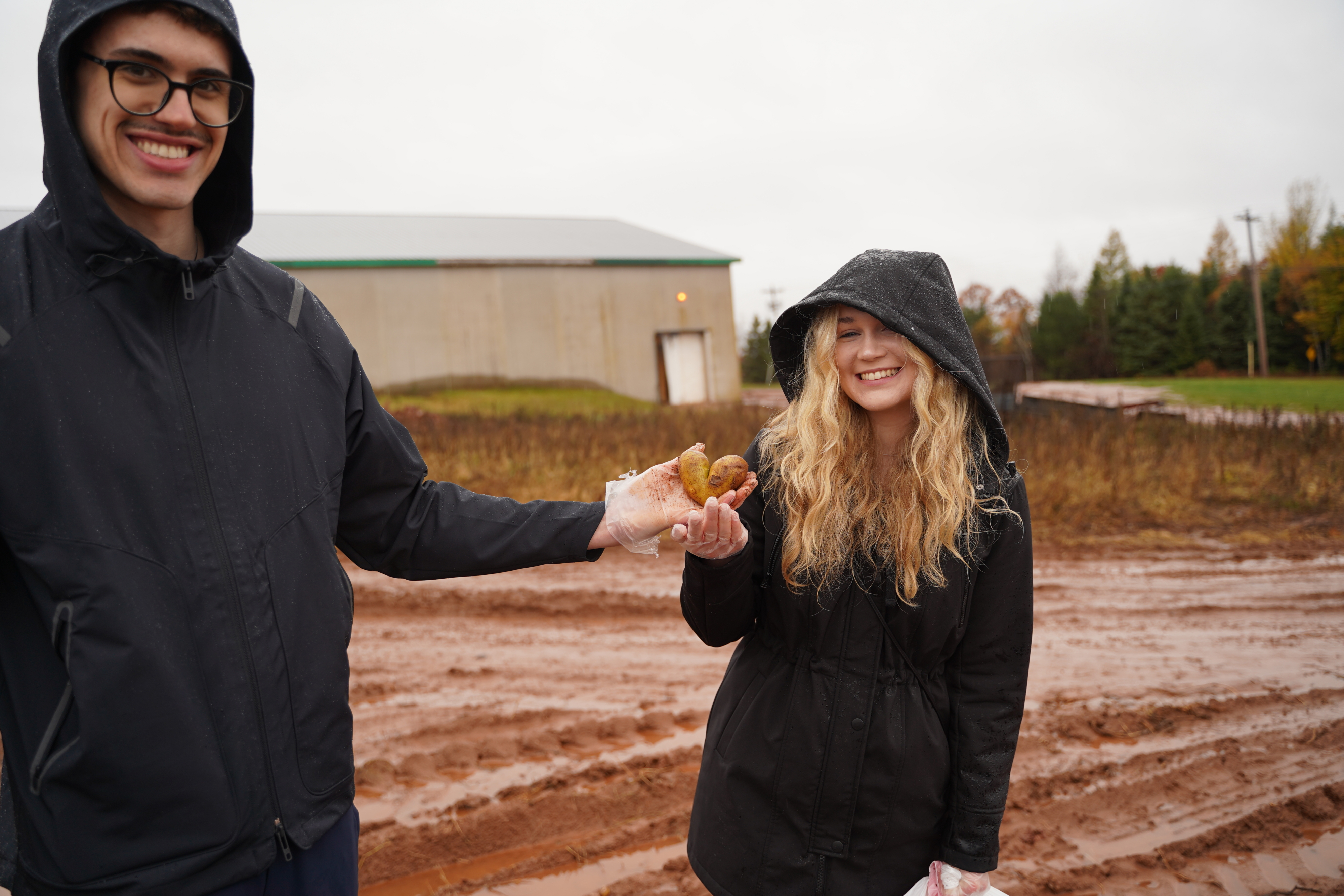

“I honestly didn’t expect to be asked to be co-president,” MacDougall said. “It was kind of unexpected for me, but I was really happy, and it was really kind of a privilege to be asked to do that.” Crystal echoed the sentiment, describing the year as one focused on building a strong foundation. “The first semester was really our foundation,” he said. “We’ve done the groundwork, and now it’s all about building.”
That groundwork includes several ongoing and emerging projects that reflect Enactus’ sustainability-first approach. One of the club’s most popular initiatives is its potato soap project, which addresses both food waste and hygiene shortages. The soap is made from potatoes that would otherwise be discarded. “For each bar we sell, we donate one,” Crystal explained.
Beyond local initiatives, Enactus UPEI is also collaborating internationally. The club is working with an Enactus team in Delhi, India, on a project that supports rural women through the production of tote bags made from textile waste. “For every tote bag that we sell, we want to donate one product,” MacDougall said, explaining the one-for-one model. “It supports women in rural areas who often don’t get financial compensation.”
Another major focus for the club this year is supporting student-led innovation through collaboration. One of the projects, LIMBRISE, focuses on developing a hands-free knee crutch to help people with knee injuries move more easily and independently. The idea came from a UPEI Engineering student who reached out to Enactus for support.

“He said, ‘I have a team of really strong engineers, but we need business students to help us market it and get investors,’” MacDougall said. Enactus is helping by working on marketing, reaching out to potential buyers, and connecting the team with groups like varsity sports teams and pharmacies. Crystal emphasized the broader impact of the project, pointing out that traditional crutches often limit mobility and independence. “People lose a lot of freedom,” he said, adding that reduced mobility can also affect mental health.
For the co-presidents, the importance of Enactus goes beyond individual projects. MacDougall believes the club fills a gap in how students approach business education. “We’re not only allowing members to build a company from the ground up,” she said, “but we’re also allowing them to promote sustainable business, which I think is the responsibility of business students, whether they know it or not.”
Crystal added that Enactus’ competitive structure also pushes students to think bigger. “When you go to these competitions, you get to see all these different projects other people are doing,” he said. “It’s pretty inspirational seeing the work of students from across Canada, and across the world.”
That level of exposure pays off. Last year, Enactus UPEI placed first in the sustainability challenge at regionals and went on to place third nationally. This year, the team is aiming even higher, with regional competitions scheduled for February and nationals in Montreal in May.
Despite its growth, the club hasn’t been without challenges. Balancing busy student schedules remains one of the biggest hurdles. “It’s how busy everyone is,”
Looking ahead, Enactus has no shortage of plans. In addition to competitions, the club is preparing for a sustainability-focused hackathon in collaboration with Math and Computer Science students starting this Friday, Jan. 23, and exploring new projects, including one centred on seagrass restoration using robotics. As the semester continues, Enactus UPEI is positioning itself as more than a business club, but rather as a space where students learn how to build lasting projects that matter. “We’re only about a year and a half old,” Laura said. “But the growth we’ve had is great, and we’re just getting started.”